Are Apple Cores and Seeds Safe for Pets? Myths Busted
Are Apple Cores and Seeds Safe for Pets? Myths Busted
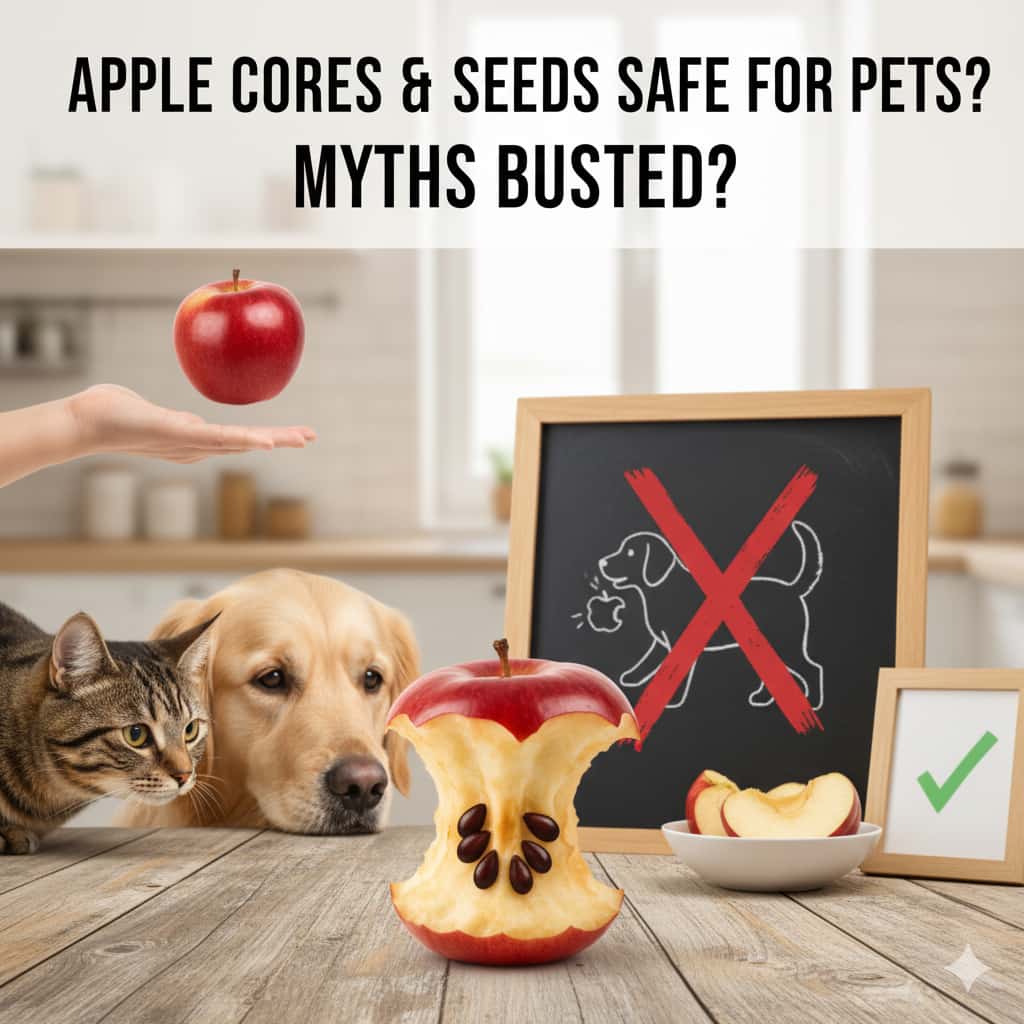
Apples are a crisp, sweet staple in most households, and many pet parents love sharing a slice with their furry companions. But the moment you hand over a piece with the core still attached, someone inevitably warns: “The seeds have cyanide!” or “That core will block their intestines!” These scare stories spread faster than a puppy chasing a squirrel.
In this guide, we separate fear from fact using veterinary science, real-world data, and practical advice. By the end, you’ll know exactly how to treat your dog or cat to apples—without the panic.
Apple Safety for Pets
Apples rank among the top five fruits fed to dogs, according to a 2024 PetMD survey of 3,200 owners. Their low calorie count (52 kcal per 100 g) and high water content (86%) make them an appealing snack. Yet Google still auto-completes “apple seeds” with “poisonous to dogs.”
Why the disconnect? Old wives’ tales travel farther than peer-reviewed studies. Let’s fix that.
The Cyanide Myth: Do Apple Seeds Really Poison Pets?
Apple seeds contain amygdalin, a cyanogenic glycoside. When chewed, it releases cyanide. Sounds terrifying—until you see the numbers.
- Toxicity threshold for cyanide in dogs: 2 mg/kg body weight (Merck Veterinary Manual).
- Cyanide per seed: ~0.6 mg.
- Seeds needed to harm a 20-lb dog: 67 seeds (assuming 100% bioavailability, which never happens).
Cats require even less to show symptoms, but their smaller size still demands ~25 seeds for a 9-lb feline.
Real-world verdict: A dog would need to pulverize and swallow an entire orchard’s worth of seeds in one sitting to reach danger. Accidental nibbles? Negligible risk.
Apple Cores: Choking Hazards vs. Nutritional Value
The core itself contains no cyanide. The stem, tough middle, and occasional seed are the only concerns.
| Risk | Likelihood | Mitigation |
|---|---|---|
| Choking | Low (small dogs/cats) | Slice into bite-sized pieces |
| Intestinal blockage | Rare (large cores in tiny pets) | Remove core entirely |
| Fiber benefit | Moderate | Core adds 1–2 g insoluble fiber |
Veterinarians at Tufts Cummings School report zero core-related obstructions in their 2023–2025 database of 1,800 GI foreign-body cases. The real blockage culprits? Rawhide, bones, and corn cobs.
Benefits of Apples for Dogs: Hydration, Fiber, and Vitamins
 Benefits of Apples for Dogs: Hydration, Fiber, and Vitamins
Plain apple flesh delivers:
- Vitamin C (14% DV per 100 g) – supports collagen in joints.
- Soluble fiber (pectin) – binds bile acids, lowering cholesterol.
- Polyphenols – reduce inflammation markers in obese dogs (2023 JAVMA study).
One medium apple (182 g) provides 95 calories—perfect for replacing 20% of a commercial treat allowance.
Benefits of Apples for Cats: A Carnivore’s Occasional Treat
Cats lack sweet taste receptors, so apples aren’t a craving. Still, the hydration boost matters for indoor cats prone to urinary crystals. A 1-inch cube offers 15 ml of water with minimal carbs (2.5 g).
Use apples as a pill pocket alternative—freeze a sliver with medication inside.
Preparation Tips: How to Safely Feed Apples to Pets
- Wash thoroughly – removes 80% of pesticide residue (USDA data).
- Core and de-seed – eliminates any theoretical cyanide risk.
- Slice thinly – prevents choking; freeze slices for summer cooling.
- Organic vs. conventional – no nutritional difference for pets; choose budget.
Pro tip: Grate apple over kibble to encourage picky eaters.
7. Portion Control and Frequency: Avoiding Overfeeding Pitfalls
Treats ≤ 10% of daily calories (AAHA guideline).
| Pet Weight | Max Apple Flesh (daily) |
|---|---|
| 10 lb | ½ oz (1 thin slice) |
| 25 lb | 1 oz (2–3 slices) |
| 50 lb | 2 oz (¼ medium apple) |
| 9 lb cat | ¼ oz (1 tsp grated) |
Excess leads to loose stools from sorbitol, a natural sugar alcohol.
8. What Happens If Your Pet Eats Apple Seeds or a Core?
Mild exposure (1–5 seeds):
- Possible tummy gurgle.
- Monitor; no treatment needed.
Large exposure (entire core + seeds):
- Vomiting within 6 hours (mechanical irritation).
- Call vet if persistent >12 hours or if pet <10 lbs.
ASPCA Animal Poison Control (888-426-4435) logged fewer than 30 apple-seed consults in 2024—none required hospitalization.
9. Related Pet Food Dangers: Other Fruits to Watch Out For
| Fruit | Toxic Part | Safe Amount |
|---|---|---|
| Grapes/Raisins | Unknown compound | Zero |
| Cherries | Pits (cyanide + choke) | Flesh only, pitted |
| Avocado | Persin | Zero |
| Apple | Seeds (trace cyanide) | Flesh unlimited in moderation |
Apples remain one of the safest fruits on the ASPCA’s approved list.
10. Vet-Approved Alternatives: Apple-Inspired Pet Treats and Recipes
DIY Frozen Apple Pops
- Blend 1 apple (cored) + ½ cup plain yogurt.
- Freeze in ice cube trays.
- 1 pop = 25 kcal for small dogs.
Commercial picks
- Wholesome Pride Apple Slices (single ingredient, seed-free).
- Zuke’s Mini Naturals – apple flavor without actual seeds.
11. Conclusion: Enjoying Apples Guilt-Free with Informed Pet Parenting
The cyanide myth is just that—a myth. Apple cores pose minimal risk when portioned correctly, and the flesh offers hydration, fiber, and joy.
Next time your dog gives you puppy eyes at the fruit bowl, slice, core, and share confidently. Your pet gets a healthy crunch, and you get peace of mind backed by science.
Always consult your veterinarian for pets with diabetes, pancreatitis, or seed allergies.

Expired Pet Meds: Safe Disposal and What Vets Recommend

Why Are Male Calico Cats So Rare? Genetics and Fun Facts
