Cat Years to Human Years Calculator: Age Chart Inside
Cat Years to Human Years Calculator: Age Chart Inside
 Introduction to Cat Aging: Why Convert Cat Years to Human Years?
 Introduction to Cat Aging: Why Convert Cat Years to Human Years?
Every cat owner has asked it at least once: “How old is my cat in human years?” The answer isn’t just trivia. Knowing your cat’s equivalent human age helps you spot subtle health shifts, adjust diet and exercise, and schedule vet visits at the right time. Unlike the lazy “7-to-1” shortcut, modern veterinary science gives us a far more accurate picture—one that changes how we care for our cats from playful kitten to dignified senior.
The Myth of the “1 Cat Year = 7 Human Years” Rule
For decades, people multiplied a cat’s age by seven and called it a day. That rule is dead wrong. A 1-year-old cat is not a 7-year-old child; she’s closer to a 15-year-old teenager—physically mature, emotionally impulsive, and still growing. The 7-to-1 myth ignores the explosive growth of kittenhood and the graceful slowdown of feline adulthood. Ditch it. You’ll make better decisions for your cat.
How Cats Age Differently from Humans: Key Biological Factors
Cats sprint through childhood, cruise through middle age, and ease into seniority on a timeline humans can only envy.
- Kittens reach sexual maturity by 6 months—equivalent to a human hitting puberty around age 10.
- Adults peak between 3–6 years, roughly human 28–40.
- Seniors (11+) mirror humans in their 60s and beyond, with slower metabolism and stiffer joints.
Breed, spay/neuter status, and indoor vs. outdoor life tweak the dial further. A pampered indoor Ragdoll often outlives a street-smart alley cat by 5–8 years.
Standard Formula for Cat Years to Human Years Conversion
Veterinarians use a simple, evidence-backed formula called the 15-9-4 rule:
| Cat Age | Add to Human Equivalent |
|---|---|
| 1st year | +15 years |
| 2nd year | +9 years |
| Each year after | +4 years |
Example: A 5-year-old cat = 15 (first year) + 9 (second) + 4×3 (years 3–5) = 36 human years.
For months, interpolate: a 6-month-old kitten sits around 10 human years—past toddlerhood but pre-teen.
Interactive Cat Years to Human Years Calculator
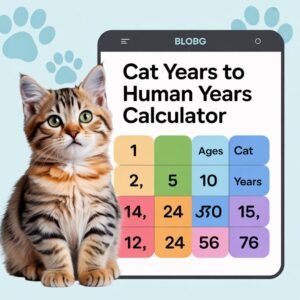
No more mental math. Use the widget below:
Pro tip: Bookmark this page and update every birthday. Small changes compound into big wellness wins.
Detailed Cat Age Chart: Cat Years vs. Human Years Equivalents
| Cat Age (Years) | Human Equivalent (Approx.) | Life Stage |
|---|---|---|
| 0–1 month | 0–1 year | Newborn |
| 2–3 months | 2–4 years | Toddler |
| 4–6 months | 5–10 years | Child |
| 7–12 months | 10–15 years | Teen |
| 2 years | 24 years | Young Adult |
| 3 years | 28 years | Prime Adult |
| 5 years | 36 years | Mid-30s |
| 7 years | 44 years | Early 40s |
| 10 years | 56 years | Mid-50s |
| 12 years | 64 years | Early 60s |
| 15 years | 76 years | Senior |
| 18 years | 88 years | Geriatric |
| 20+ years | 96+ years | Super Senior |
Print it, stick it on the fridge—your vet will thank you.

Cat Life Stages: Matching Ages to Developmental Milestones
Kitten Stage (0–1 Year: Human 0–15)
Explosive growth, teething, first vaccines, and boundless zoomies. Spay/neuter around 5–6 months to curb hormones and cancer risk.
Junior/Adult Stage (1–6 Years: Human 15–40)
Peak muscle, glossy coat, ninja reflexes. Annual check-ups, dental cleanings, and high-protein diet keep them thriving.
Mature Adult Stage (7–10 Years: Human 44–56)
Subtle slowdown—less pouncing, more napping. Switch to a “mature” formula with joint support; schedule bloodwork to catch kidney or thyroid issues early.
Senior Stage (11–14 Years: Human 60–72)
Arthritis, weight flux, and dental disease creep in. Twice-yearly vet visits, soft food, and warmed beds become non-negotiable.
Geriatric/Super Senior Stage (15+ Years: Human 76+)
Every day is a gift. Focus on comfort: ramps, low-entry litter boxes, and appetite stimulants if needed. Celebrate the grey whiskers.
Factors Affecting Cat Lifespan and Aging Speed
- Indoor vs. Outdoor: Indoor cats live 12–15 years on average; outdoor cats often 3–5. Cars, predators, and parasites cut lives short.
- Breed: Siamese and Maine Coons frequently hit 15+; Persians battle breathing issues earlier.
- Spay/Neuter: Reduces cancer and roaming risks—adds 1–3 years.
- Diet & Weight: Obesity shaves 2–3 years; lean cats age slower.
- Dental Care: 70% of cats over 3 have periodontal disease—brush or use dental treats.
Health Tips by Cat Age Stage: Proactive Care for Longevity
| Stage | Diet | Exercise | Vet Schedule | Red Flags |
|---|---|---|---|---|
| Kitten | 3–4 meals, high-calorie kitten chow | Daily play sessions | Vaccines at 6, 9, 12 weeks | Lethargy, diarrhea |
| Junior/Adult | 2 meals, protein-first | 15-min laser chases | Annual | Sudden weight loss |
| Mature | Joint supplements, lower calories | Gentle wand toys | Bloodwork yearly | Increased thirst |
| Senior | Soft or warmed food, kidney support | Short, frequent play | Bi-annual | Hiding, vocal changes |
| Geriatric | Appetite stimulants if needed | Passive warmth | Monthly weigh-ins | Confusion, incontinence |
FAQs: Common Questions About Cat Years and Human Equivalents
Q: How old is a 6-month-old kitten in human years? A: Around 10 years—think energetic elementary schooler.
Q: Does spaying/neutering affect aging? A: It slows certain cancers and eliminates uterine infections, effectively extending healthy years.
Q: My 13-year-old cat still acts like a kitten. Is the chart wrong? A: Individual personality + great care can defy averages. Keep doing what you’re doing.
Q: Are there breed-specific charts? A: Not officially, but long-lived breeds (Siamese, Burmese) often add +1–2 human years per cat year past age 10.
Conclusion: Cherish Every Stage of Your Cat’s Nine Lives
Your cat doesn’t count birthdays—they count sunbeams, treats, and your lap. Use this guide not as a rigid ruler but as a compassionate compass. Convert the years, yes—but more importantly, convert every day into love, play, and preventive care.
Because the only number that truly matters is the number of purrs you share before the rainbow bridge calls.
Share this post with a fellow cat lover. Bookmark it. And hug your feline today—whatever age they may be.

Cat Sneezing and Coughing: Causes, Symptoms, and Treatment in Cats

Top 5 Deadly Cat Diseases: Liver Issues, Infections, Parasites & Distemper Causes

One Comment