Expired Pet Meds: Safe Disposal and What Vets Recommend
Expired Pet Meds: Safe Disposal and What Vets Recommend
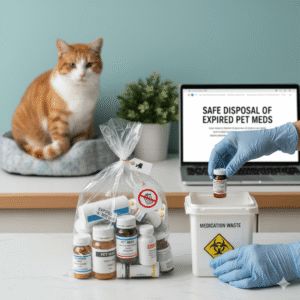
Pet parents love keeping their furry friends healthy, but what happens when that bottle of flea treatment or pain reliever reaches its expiration date? Tossing expired pet meds in the trash or down the toilet seems easy, but it can harm your pet, your family, and the planet. This guide breaks down everything you need to know about safe disposal, straight from vet recommendations and official guidelines.
Expired Pet Medications
Every medication—whether for humans or pets—comes with an expiration date stamped on the label. That date isn’t just a suggestion; it’s the manufacturer’s guarantee that the drug will work at full strength and remain safe up to that point. After expiration, chemical breakdown can reduce effectiveness or even create harmful byproducts. For pet owners, expired meds lurking in the cabinet represent a hidden risk that’s easy to overlook until it’s too late.
The Dangers of Using or Keeping Expired Pet Meds
Expired medications lose potency, meaning your dog’s heartworm preventive might not protect against parasites. Worse, some drugs degrade into toxic compounds. Antibiotics can foster resistant bacteria if under-dosed, while pain relievers like NSAIDs may irritate the stomach lining more aggressively once degraded. Keeping old meds also raises the chance of accidental ingestion by curious pets or toddlers who mistake pills for treats.
Why Proper Disposal Matters: Environmental and Wildlife Impact
Flushing meds sends pharmaceuticals into waterways, where fish and amphibians absorb them. Studies show traces of common pet antibiotics in rivers, contributing to antibiotic resistance across ecosystems. Birds and small mammals can ingest discarded pills from landfills, leading to poisoning. Responsible disposal keeps these chemicals out of the food chain and protects drinking water sources.
Vet-Recommended Safe Storage Practices for Pet Medications
Extend the usable life of your pet’s meds with simple habits:
- Store in a cool, dry place below 77°F (25°C)—never in the bathroom or near the stove.
- Use the original child-resistant container.
- Keep liquids upright and away from direct sunlight.
- Check monthly for changes in color, smell, or texture.
Proper storage prevents premature expiration and reduces waste.
Can You Reuse Expired Pet Meds? Vet Advice on Effectiveness and Risks
Veterinarians overwhelmingly say no. Potency drops unpredictably; a heartworm pill might contain only 60% of the active ingredient after expiration, leaving your pet vulnerable. Liquid suspensions separate or grow bacteria. The only exception? In rare emergencies, a vet might approve short-term use of slightly expired meds under direct supervision—but never decide this yourself.
Top Safe Disposal Methods for Expired Pet Medications
- DEA Take-Back Events – Twice yearly, police stations and pharmacies host collection days. Drop off pills, liquids, and patches—no questions asked.
- Permanent Drop Boxes – Many Walgreens, CVS, and sheriff offices maintain locked bins year-round.
- Mail-Back Envelopes – Order pre-paid, pre-addressed envelopes from the FDA or USPS for controlled substances.
These options ensure incineration at regulated facilities, eliminating environmental release.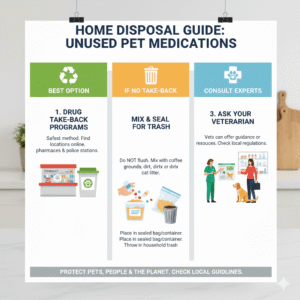
Home Disposal Guide: FDA-Approved Techniques for Unused Pet Meds
When take-back isn’t available:
- Mix solid pills with used coffee grounds, kitty litter, or dirt.
- Seal the mixture in a leak-proof container or zip bag.
- Scratch out personal info on the original bottle, then trash it.
- Never flush unless the label or FDA explicitly lists the drug as flushable (very rare for pet meds).
This renders meds unappealing and inaccessible to scavengers.
Special Handling: Disposing of Controlled Substances and Hazardous Pet Meds
Opioids like tramadol, chemotherapy drugs, and injectable insulin require extra caution:
- Controlled substances must go to DEA events or mail-back programs—home trash is illegal.
- Sharps (needles, auto-injectors) belong in FDA-cleared puncture-proof containers sold at pharmacies.
- Chemotherapy waste often needs hazardous-waste pickup; ask your oncologist vet.
Donating Unexpired Pet Medications: Shelters, Vets, and Low-Income Programs
Unopened, unexpired meds still in original packaging can help others:
- Local animal shelters and rescues accept flea/tick preventives and antibiotics.
- Programs like “Helping Hands” veterinary assistance match donations with low-income families.
- Always call first—most facilities inspect seals and expiration dates on-site.
Finding Local Resources: Take-Back Events and Pharmacies Near You
- Visit DEA.gov and enter your zip code for collection sites.
- Use the FDA’s Safe Disposal Locator widget.
- Call your county hazardous waste facility; many accept pet meds quarterly.
- Apps like “PillDrop” notify you of upcoming events.
FAQs: Common Questions on Expired Pet Med Disposal from Vets
Q: Can I flush antibiotics? A: No—only a handful of human opioids appear on the FDA flush list. Pet antibiotics contaminate water.
Q: What about topical flea drops? A: Squeeze tubes into kitty litter, seal, and trash. Never rinse down the drain.
Q: My vet gave me extra pills—can I save them? A: Return extras at your next visit; clinics often redistribute or dispose properly.
Q: Are natural supplements included? A: Yes—herbal remedies degrade too. Follow the same mixing-and-trashing method.
Conclusion: Prioritizing Pet Health Through Responsible Med Management
A quick cabinet sweep every six months prevents accidents and keeps your home safe. Mark your calendar for the next DEA Take-Back Day, bookmark local drop-off sites, and talk to your vet about refill timing to minimize leftovers. Small habits today protect your pets, wildlife, and water tomorrow.

Guide to Cat Digestive and Urinary Health: Problems, Prevention, and Best Foods
Common Cat Dental Health Issues: Stomatitis, Fractured Teeth, Periodontal Disease, and the Best Toothpastes for Prevention