Soft Tissue Trauma in Cats: Symptoms, Causes & Treatment Guide
Soft Tissue Trauma in Cats: Symptoms, Causes & Treatment Guide
 Soft tissue trauma refers to any injury affecting muscles, ligaments, tendons, or skin without involving bones. In cats, these injuries are surprisingly common due to their acrobatic lifestyle and curiosity-driven antics. A single misjudged leap from a windowsill or a skirmish with a neighborhood stray can lead to days—or even weeks—of discomfort.
Unlike fractures, which are often immediately obvious, soft tissue injuries can be sneaky. Your cat might still eat, groom, and curl up on your lap, masking the pain. Recognizing these subtle signs early is the difference between a quick recovery and chronic mobility issues. This guide walks you through every stage—from identification to full rehabilitation—so you can act fast and confidently.
Common Types of Soft Tissue Injuries in Cats
Cats don’t just “twist an ankle.” Their injuries fall into distinct categories:
- Sprains: Overstretched or torn ligaments, often in the wrist (carpus) or ankle (tarsus) from landing awkwardly.
- Strains: Muscle or tendon damage, common in the hind legs after explosive sprints or jumps.
- Contusions (Bruises): Blunt-force trauma causing blood vessel rupture under the skin—think car bumpers or dropped objects.
- Tendonitis: Inflammation from repetitive microtrauma, seen in active breeds that chase laser pointers for hours.
- Partial Ruptures: Rare but serious; a tendon or ligament tears incompletely, causing instability.
Each type demands a tailored approach. Misdiagnosing a strain as “just a limp” can delay healing and invite complications.
Causes and Risk Factors of Soft Tissue Trauma
Accidents don’t discriminate, but some cats are statistically more vulnerable:
| Cause | High-Risk Scenarios | At-Risk Cats |
|---|---|---|
| Falls | Multi-story drops, slippery counters | Indoor-only, young adults |
| Vehicular Trauma | Dusk/dawn roaming near roads | Outdoor-access cats |
| Animal Fights | Territorial disputes, unneutered toms | Intact males, feral colonies |
| Overexertion | Zoomies on hardwood, obsessive toy chasing | Kittens, hyperactive breeds |
| Obesity-Related Strain | Extra weight stressing joints during normal jumps | Senior cats, overfed pets |
Breed Note: Siamese, Bengals, and Abyssinians top the list for activity-related injuries due to their high-energy personalities. Conversely, Persians and Ragdolls face higher bruise risk from low-speed collisions with furniture.
Recognizing Symptoms: Early Signs of Soft Tissue Injury
Cats are masters of stoicism. Watch for these red flags:
- Limping or favoring one leg (may be intermittent)
- Swelling that feels warm to the touch
- Bruising under fur—part the hair to check skin
- Guarding: Hissing or biting when you touch the area
- Reduced jumping onto favorite perches
- Excessive licking of a specific spot (pain relief behavior)
- Posture changes: Hunched back, tail held low
Pro Tip: Film your cat walking in slow motion on your phone. Subtle hitches in gait are easier to spot on replay than in real time.
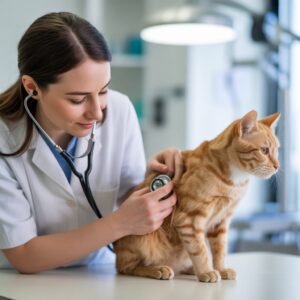
Diagnosis: How Vets Identify Soft Tissue Trauma
Veterinary diagnosis follows a logical sequence:
- History Taking: “When did you first notice the limp?” “Any recent falls?”
- Physical Exam:
- Palpation for heat, swelling, or pain response
- Joint stability tests (drawer sign for cruciate issues)
- Muscle symmetry comparison
- Imaging:
- X-rays (rule out fractures—soft tissue won’t show)
- Ultrasound (visualizes muscle tears, fluid pockets)
- MRI/CT (rare; reserved for surgical planning)
- Lab Work: CBC/chemistry to check for infection or systemic inflammation
DIY Pre-Vet Check: Gently flex and extend the limb. If your cat pulls away only at a specific angle, note it for the vet—precision matters.
Treatment Options for Soft Tissue Injuries in Cats
Treatment scales with severity:
| Injury Grade | Approach | Duration |
|---|---|---|
| Mild (Grade 1) | Rest + NSAIDs (Meloxicam) + cold compresses | 7–14 days |
| Moderate (Grade 2) | Strict crate rest + pain meds + laser therapy | 3–6 weeks |
| Severe (Grade 3) | Surgical repair + splinting + rehab | 8–12 weeks |
Medication Warning: Never give human ibuprofen or acetaminophen—both are toxic to cats. Only vet-prescribed NSAIDs are safe.
Surgical Cases: Complete Achilles tendon ruptures or deep lacerations with tendon involvement require specialist referral. Delaying surgery beyond 72 hours worsens outcomes.
Recovery and Rehabilitation: Helping Your Cat Heal
Healing isn’t passive. Active rehab prevents scar tissue and muscle atrophy:
- Week 1–2: Absolute rest in a large dog crate or bathroom. No jumping.
- Week 3: Begin passive range-of-motion (PROM) exercises—5 reps, 3x daily.
- Week 4+: Controlled leash walks on carpet, then short supervised play sessions.
- Hydrotherapy (if available): Warm-water treadmill reduces joint stress.
Massage Technique: Use light circular strokes proximal to the injury to improve circulation. Avoid the wound site.
Nutrition Boost: Add omega-3s (fish oil dosed at 100 mg EPA/DHA per 10 lbs body weight) to reduce inflammation.
Home Care and Prevention Strategies
Immediate First Aid:
- Cold Pack: Frozen peas wrapped in a towel—10 minutes on, 20 off, for 24 hours.
- Compression: Light vet wrap (not too tight—check toes for swelling).
- Elevation: Impossible in cats, but keep them on a low bed.
Long-Term Prevention:
- Install window screens or catios.
- Use breakaway collars to reduce fight injuries.
- Maintain ideal weight—every extra pound adds 4x stress on joints.
- Schedule biannual senior wellness exams after age 7.
Cost Reality Check: Mild cases average $150–$400. Surgical repairs can exceed $2,500. Pet insurance with accident coverage pays for itself after one incident.
When to See a Vet: Emergency vs. Routine Care
Emergency (Go Now):
- Open wounds with visible muscle/tendon
- Limb dangling at odd angle
- Non-weight-bearing after 12 hours
- Fever >103°F or pale gums
Routine (Within 24–48 hrs):
- Intermittent limping
- Mild swelling without heat
- Normal appetite/energy
Prognosis: 90% of Grade 1–2 injuries heal fully with proper care. Grade 3 cases have 70–80% return to normal function if treated promptly.
FAQs: Common Questions on Feline Soft Tissue Trauma
Q: How long does a sprained leg take to heal? A: 10–21 days with strict rest. Jumping too soon restarts the clock.
Q: Can soft tissue injuries cause permanent limping? A: Only if untreated or complicated by infection/scar tissue. Early intervention = full recovery.
Q: Is arnica safe for cats? A: No—topical arnica is risky; oral is toxic. Stick to vet-approved options.
Q: Strain vs. sprain—what’s the difference? A: Strain = muscle/tendon. Sprain = ligament. Treatment overlaps, but diagnosis guides prognosis.
Conclusion: Empowering Cat Owners for Proactive Care
Your cat’s nine lives don’t include immunity to soft tissue trauma. The moment you spot a limp, you’re on the clock. Combine vigilant observation, rapid veterinary partnership, and disciplined home care—and you’ll sidestep the chronic issues that plague untreated cases.
Bookmark this guide. Share it with fellow cat parents. Because the best treatment is the one that starts before the injury becomes a crisis.

Cat Years to Human Years Calculator: Age Chart Inside

8 Strange Cat Behaviors Finally Explained: Excessive Meowing, Sleeping on Clothes, Shedding, Fur Softening Tips, Splitting Nails, Scooting, and Balcony Obsessions

One Comment