Why Are Male Calico Cats So Rare? Genetics and Fun Facts
Why Are Male Calico Cats So Rare? Genetics and Fun Facts
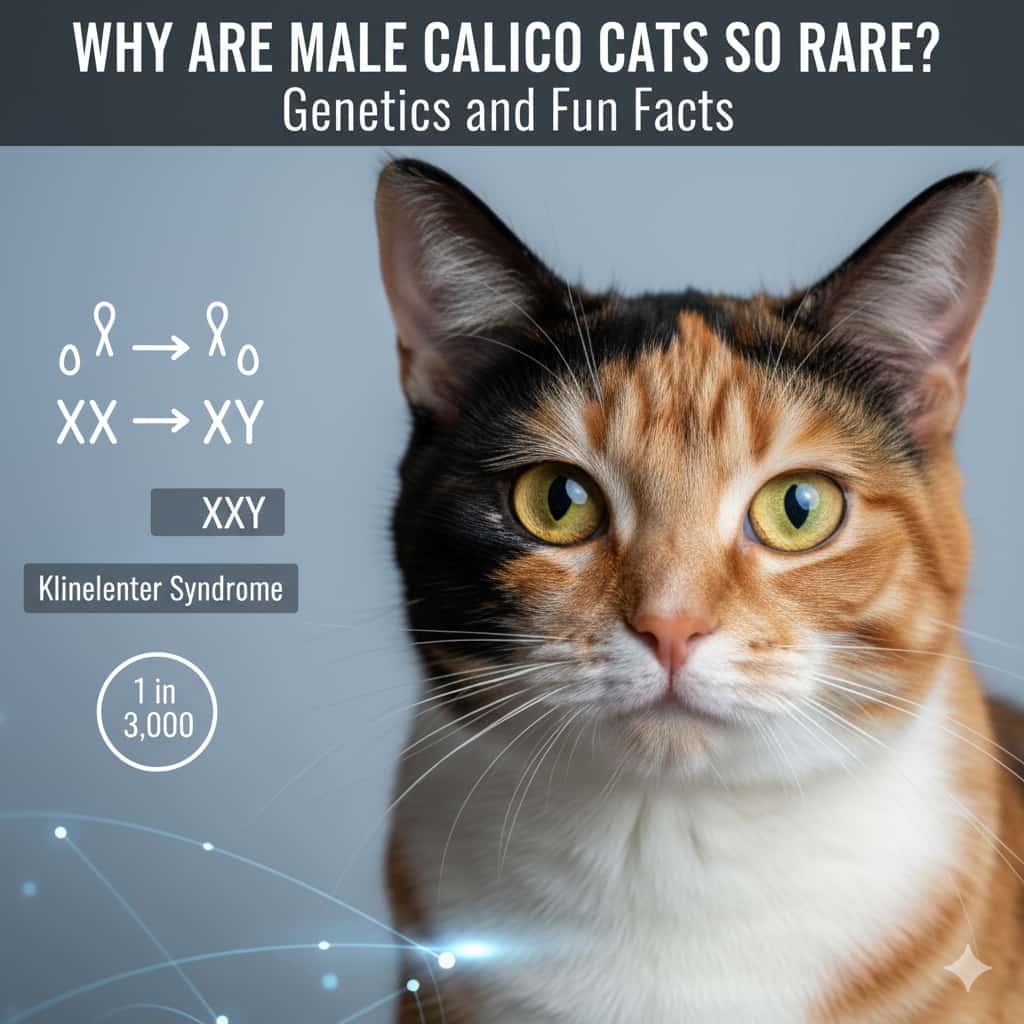
If you’ve ever spotted a cat with a dazzling patchwork of orange, black, and white fur, you’ve likely encountered a calico. These tri-colored beauties are a favorite among cat lovers for their vibrant, almost artistic coats. But here’s a jaw-dropping fact: male calico cats are extraordinarily rare, occurring in only about 1 in 3,000 calico births. That’s rarer than finding a four-leaf clover in your backyard! In this post, we’ll unravel the genetic mysteries behind their scarcity, explore the science, health considerations, and even dive into some whimsical cultural tales. Whether you’re a cat enthusiast or just curious about feline genetics, stick around for facts that’ll make you see your tabby in a whole new light.
Introduction to Calico Cats
Calico cats aren’t a breed but a color pattern that can appear in various breeds like the American Shorthair, Maine Coon, or even mixed rescues. What sets them apart is their signature tri-color coat: bold patches of orange (or ginger), black, and white. This isn’t random—it’s a genetic masterpiece tied to the cat’s sex chromosomes.
But why the buzz around males? In a world where 99.9% of calicos are female, stumbling upon a male version feels like winning the cat lottery. These rarities spark endless questions: Is it a miracle of nature? A sign of something more? We’ll break it down step by step, blending hard science with heartwarming stories to satisfy your curiosity.
What Makes a Cat Calico? Coat Patterns and Colors
To appreciate male calicos, we first need to decode the basics of their look. Calico coats are a symphony of pigmentation, driven by just a few key genes.
The Tri-Color Magic: White, Black, and Orange Explained
The white patches come from a dominant gene called the “white spotting” or “piebald” gene (symbolized as S), which suppresses color in certain areas of the fur. The black and orange? That’s where things get colorful—literally.
Black fur is the default for cats without the orange gene, while orange (or red) requires a specific mutation. These colors don’t mix smoothly; instead, they form distinct patches due to a process we’ll geek out on later. Fun twist: The white acts as a canvas, making the black and orange pop like a living paint-by-numbers.
Tortoiseshell vs. Calico: Key Differences
Don’t confuse calicos with tortoiseshells (often called “torties”). Both share black and orange, but torties lack the white—resulting in a brindled, swirling effect like a marbled cake. Calicos, on the other hand, need at least a third of their coat to be white to earn the name. It’s a subtle but important distinction: torties can be all-female too, but calicos’ white requirement amps up the visual drama.
The Genetics of Calico Coats: X-Chromosome Basics
Cat coat colors aren’t just pretty—they’re a window into sex-linked genetics. Cats have 19 pairs of chromosomes, including sex chromosomes: females are XX, males XY. Here’s where the magic (and rarity) begins.
How X-Inactivation Creates Patchy Fur
In female cats (XX), one X chromosome is randomly “silenced” in each cell during early development—a process called X-inactivation or Lyonization. This creates mosaicism: some cells express the black allele, others the orange, leading to those iconic patches. It’s like nature’s random art project, ensuring no two calicos look exactly alike.
Males (XY) only have one X, so they typically express just one color—either black or orange, but not both. That’s why calicos are overwhelmingly female.
Role of the Orange Gene Mutation on the X Chromosome
The orange gene (O) is the star player, located on the X chromosome. The O allele triggers orange fur, while o (non-orange) allows black. In females, heterozygous cats (Oo) get the best of both worlds. But males? With only one X, they’re stuck with uniform color—unless something extraordinary happens.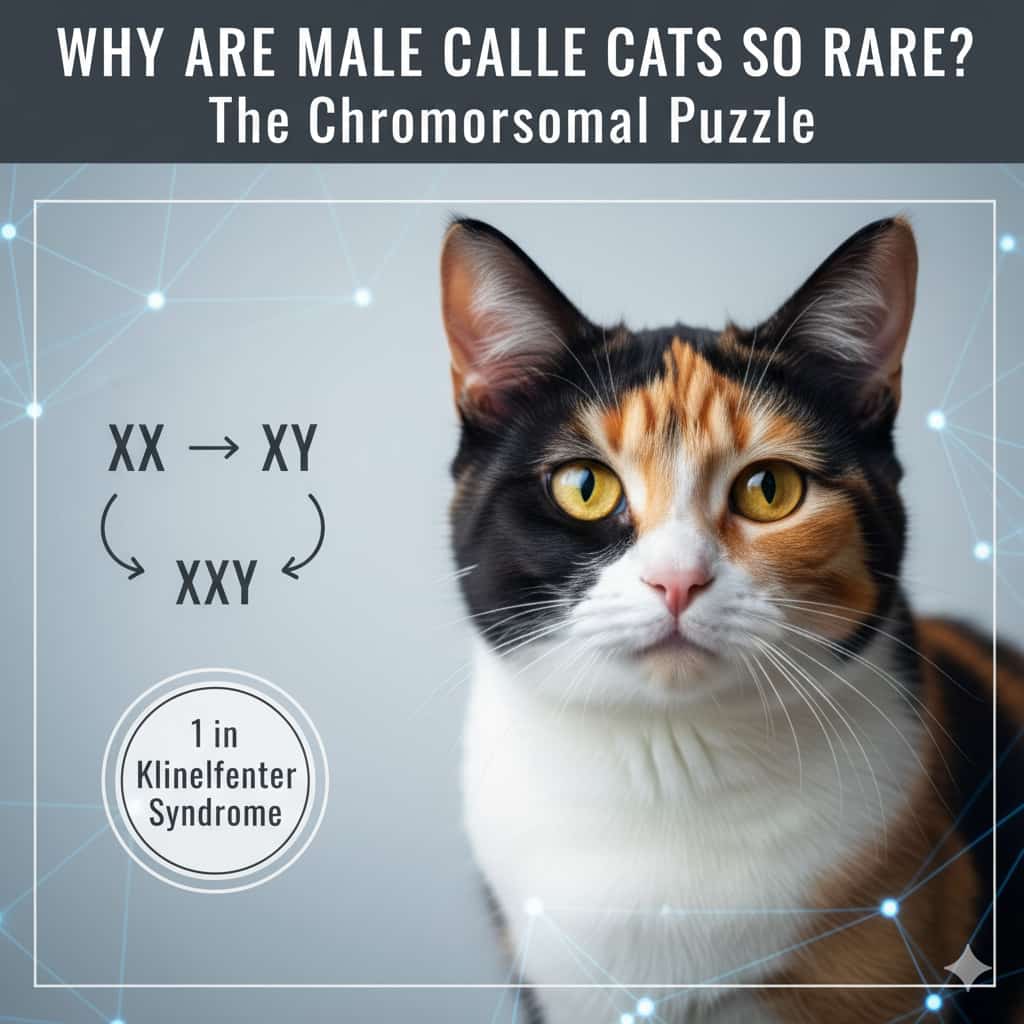
Why Are Male Calico Cats So Rare? The Chromosomal Puzzle
So, how do males pull off the tri-color trick? It boils down to genetic anomalies that are about as common as a cat loving baths.
Standard Cat Genetics: Why Females Dominate Calicos (XY vs. XX)
As mentioned, the XY setup limits males to one color expression. For a male to show both black and orange, he needs two X chromosomes—defying the usual rules. This happens in less than 0.03% of cases, making male calicos a statistical unicorn.
The XXY Anomaly: Klinefelter Syndrome in Cats
The most common culprit? An extra X chromosome, creating an XXY makeup—feline equivalent of Klinefelter syndrome in humans. During meiosis (sperm or egg formation), nondisjunction can lead to this trisomy. These cats develop female-like traits externally but male organs internally. It’s viable but rare, affecting roughly 1 in 3,000 calicos overall.
Genetic Chimerism: Fusion of XX and XY Embryos as an Alternative Cause
Even rarer is chimerism: two embryos (one XX, one XY) fuse early in development, blending cell lines. The result? A single cat with patches from both genetic sets. This explains some fertile male calicos, though they’re still outliers.
Health Implications for Male Calico Cats
Spotting a male calico is thrilling, but it’s not all purrs. Their unique genetics come with caveats—vets recommend extra TLC.
Sterility and Breeding Challenges
Nearly all XXY males are sterile due to underdeveloped testes, similar to human Klinefelter cases. Chimeric ones might sire kittens, but it’s unpredictable. If breeding’s your goal, stick to females—ethics and genetics aside.
Potential Risks: Heart Issues and Other XXY Effects
Beyond infertility, XXY cats face higher risks of urinary tract infections, diabetes, and cognitive delays. Heart conditions aren’t as commonly linked in cats as in humans, but overall, they may have shorter lifespans and need regular check-ups. Always consult a vet for tailored advice—early detection is key to keeping your rare gem healthy.
Fun Facts About Male Calico Cats
Beyond the science, male calicos add sparkle to cat lore. Their scarcity fuels fascination.
Famous Examples: Celebrity Male Calicos in History and Pop Culture
True famous males are elusive due to rarity, but fiction steps in: Meet Conrad, the talking male calico detective from The Cat Who Caught a Killer series—a sleuth with tri-color charm and nine lives’ worth of wit. In real life, social media occasionally spotlights rescues like “Apollo,” a 2023 viral XXY calico who charmed TikTok with his gentle giant vibes. They’re not Garfield-level icons yet, but give it time—their star is rising.
Adoption Stories: What to Know If You Find One
Imagine the joy: A shelter volunteer calls, “We’ve got a male calico!” Stories abound of owners describing them as “extra affectionate” or “philosophical purrers.” Pro tip: Get a DNA test to confirm XXY vs. chimera. They’re loyal companions, but budget for vet visits. If you’re adopting, celebrate the rarity—your home just got a one-in-3,000 treasure.
Calico Cats in Folklore and Culture
Calicos aren’t just genetic oddities; they’ve woven into human stories for centuries, symbolizing luck across continents.
Myths from Japan to Ireland: Luck and Superstitions
In Japan, calicos embody prosperity—the iconic Maneki-neko (beckoning cat) figurine often sports calico fur, waving in good fortune since the 19th century. Legend says a calico saved a daimyo from lightning, earning eternal gratitude. Across the sea in Ireland, folklore claims a calico’s tail cures warts, while their presence wards off ghosts and evil spirits. Sailors even carried calico cats aboard ships for protection against storms.
Modern Memes and Viral Male Calico Moments
Today, calicos rule the internet. Male ones? Pure gold for memes—like “When your cat’s rarer than your ex’s apologies.” Viral hits include a 2024 X thread of a male calico “debating” his owner, racking up millions of views. They’re bridging ancient myths with TikTok trends, proving timeless appeal.
Frequently Asked Questions (FAQs)
Got questions? We’ve got answers—straight from the litter box.
Can Male Calico Cats Reproduce?
Most can’t due to sterility from XXY chromosomes, but chimeric males occasionally can. Always spay/neuter for health and population control.
How Do You Identify a Male Calico?
Look for the tri-color coat first, then gently check genitals (vets do this best). DNA testing confirms the anomaly.
Are Male Calicos More Valuable or Special?
They’re priceless in rarity and charm, but no extra monetary value—focus on the love, not the label.
Conclusion: Celebrating Rare Felines
Male calico cats are living proof that nature loves a plot twist: a splash of genetics turning “impossible” into extraordinary. From X-chromosome quirks to global good-luck symbols, they remind us why we adore cats—their mystery, beauty, and unbreakable spirit. Next time you see a calico (male or not), give an extra scratch behind the ears.
Got a calico story? Share in the comments below—we’d love to hear! For more feline deep dives, check our guides on cat age calculators or tortoiseshell cat traits. And if you’re hunting for your own rare find, browse adoptable kitties at your local shelter today. What’s your dream cat color combo? Let us know!

Common Cat Skin Conditions: Atopic Dermatitis, Flea Allergies, Mites, Hot Spots, Scabs, Food Allergies, and Fungal Infections

8 Strange Cat Behaviors Finally Explained: Excessive Meowing, Sleeping on Clothes, Shedding, Fur Softening Tips, Splitting Nails, Scooting, and Balcony Obsessions